Striking a Chord: Investigating the State of the Music Industry in Australia and the Struggles Faced by Independent Artists
Written by Lauren Mills
On March 31st, the most recent data from the International Federation of the Phonographic Industry (IFPI) was published in an annual Global Music Report.
On a global basis, the recent report revealed that the global revenue growth was up by 9%, making this the 8th consecutive year of growth and pushing the value of global recorded music revenue to US$26.2 billion.
According to the data published in last year’s Global Music Report by IFPI, Australia’s recorded music industry was the lowest performing market, with 4.4% growth in revenue.
In this year’s report, the data reveals that Australia’s recorded music market grew by 8.1% and remained a top 10 market globally.
A recent article published by Issy Phillips in PEDESTRIAN sheds light on the Australia Recording Industry Associations (ARIA) current crisis, in reference to the lack of Australian music on the ARIA charts.
“We exist to shine a spotlight on Australian artists and are facing a crisis… talking to people in the industry, it’s the worst it’s been for a very long time,” Annabelle Herd, the CEO of ARIA, told PEDESTRIAN.
For the past month, the ARIA Top 40 charts have only had one Australian song, Vance Joy’s 2013 track ‘Riptide’.
This year, there has only been two Australian albums to make the ARIA’s album chart.
“The dominance of catalogue music means it’s tough for new artists… traditional ways of finding audiences aren’t as strong and the competition is massive,” said Herd.
The article raises concerns that “Australians aren’t listening to Australian music.”
ARIA is aware of the situation and has revealed to PEDESTRIAN that changes will be made to the nomination process for the awards to ensure local talent has an even chance of being nominated.
Nazlican Eren, artist manager, radio presenter and culture consultant, told PEDESTRIAN “Australia just doesn’t put on for their artists the way other countries do. You listen to BBC Radio 1, and you’ll hear FOALS, then Stormzy… just all these different genres that really represent the multiculturalism that the UK is, and in Australia we’re just not there yet.”
Artist and broadcaster Maddy Rowe recently spoke on The Project regarding her perception on the current crisis.
“The industry has been caught cold by the streaming revolution,” said Rowe.
“In terms of Australian radio, we have to play 25% Australian artists and that 25% has to be new music.”
These content laws mean radio stations are legally obliged to promote new local music, however, many Australians are making the switch to streaming.
Focusing on popular Australian radio station Triple J, last year a total of 57 songs in Triple J’s Hottest 100 came from local artists.
In 2021, there was a total of 54 songs from local artists, in 2020, 66 songs, and in 2019, 65 songs; this shows a drop in the number of Australian songs making the Hottest 100.
“It’s a complex ecosystem the music industry, it includes touring, festivals, radio, television, then of course streaming and social media platforms are so important now for an artist to be able to promote their work. You have to be everywhere,” Herd told The Project.
Claire Qian, the local music programmer for Groovin The Moo (GTM), is “really optimistic about the opportunities which exist in Australian music… [that are] dedicated to supporting independent artists.”
Qian is responsible for curating the three local slots across the GTM Cattleyard/Triple J and Moulin Rouge main stages as well as the DJ/electronic music stages across the six shows the festival holds across Australia.
“These slots are an opportunity for us to showcase all the amazing local and emerging talent, specific to the regions of our shows,” said Qian.
In Qian’s position, she is given the opportunity to support smaller artists and give them opportunity to grow, and this is exactly what she does; however, she does also need to consider whether the tickets will sell, which can be a tough balance.
“The first part of the process is remaining on top of local music trends and following emerging acts who are on the cusp of a national/international break-through. Often these artists already have a team and our GTM programming team would be in constant liaison with their agents or managers,” said Qian.
“We really like to support these artists in their music journeys. By inviting them to perform at our festival, this initial introduction to GTM develops future prospects of inviting them on our national touring line-up.”
Qian and the other faces behind the GTM festival are passionate about ensuring small, independent artists are given the opportunity to grow; the second part of the curation process is involving regional, and mostly independent, artists on the local line-up.
“We engage regional tastemakers who have been in contact with us as ‘local promoters’ of each show, where we invite them to put forward a number of artists who they think should be on our radars,” said Qian.
Qian works in tandem with the promoters during the curation process.
“This way, we can really reflect the unique music scene and creative communities of where our regional festivals are located,” said Qian.
The GTM local line-up of indie artists was introduced to support local communities and demonstrate to Australians that artists can flourish in small towns and cities; musicians do not have to be based in big cities to make a career out of their passion.
“It’s a chance for us to shed light on independent artists who we think are producing amazing music and provide them a steppingstone to further their pursuit in music. Through curating the local line-up, we can then inspire other regional artists and patrons of the opportunities available to them should they decided to pursue music long-term,” said Qian.
However, the music industry in Australia isn’t all about fame and money, and Qian finds it important to reconnect with the local music community and its personal benefits.
“Personally, I think the goal behind introducing the local line-up is to give artists an opportunity to perform at a festival in their hometown, where they may share this memorable moment with their families, friends and the local music community,” said Qian.
Qian has volunteered within the music industry since she was a teenager and has previously worked for the non-profit music organisation, The Push Inc.
“My experience so far with the industry is that it readily engages independent artists through Australia’s countless local music organisations, community radios and arts/music/culture event collectives. These people and organisations actively involve independent artist and provide them platforms to showcase their music and meet other creatives,” said Qian.
The music industry is relatively small in Australia which can be both negative and positive.
“I think everyone is keen to support local artists in their creative journeys. Compared to a lot of other countries, I think our industry actively encourages a far more favourable attitude towards independent artists. This makes music far more accessible to both artists and listeners,” said Qian.
“There is always room for industries to do more to support independent artists, although I feel there are already some fantastic organisations and people who are going above and beyond for independent music in Australia.”
Qian advises aspiring creatives to continue making music and performing while also finding local music organisations, collectives and community radios to share your art and gain further exposure.
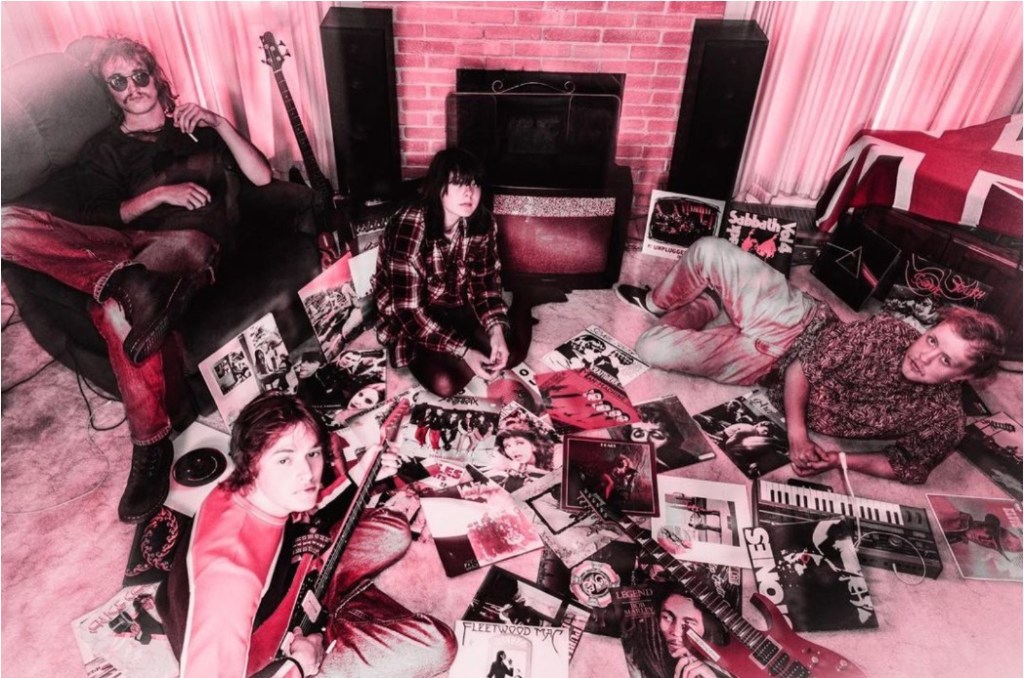
Molly Rocket is an Adelaide formed band that has started to gain popularity recently; band member Joseph Keating talks on the band’s success and their struggles as an independent/small band.
Molly Rocket formed in 2021, straight after Keating graduated high school at the end of 2020.
“The band started at a party when I was really lost on what I wanted to do for a career. Music had never really even crossed my mind, but I always knew I didn’t want a run of the mill office job and I didn’t want to be stuck in retail,” said Keating.
“I had always had a love for performing, whether it was acting or just being in front of a live audience doing something. I was at a party when I formally met Ella Phillips (our ex lead guitarist) when she got talking about her band at the time, Imperial Manderins, and I mentioned that I would love to be in a band but I can’t play an instrument well enough to be performing at that level She then suggested I start learning drums again and a week later I bought my first proper kit. I was added to a group chat a couple of months after that where I was introduced to Ben Main and Georgie Evans. Our first gig was at some dingy dive bar called the Broadcast Bar; it was a pretty gross venue, but we loved it because of that.”
Keating explains the growth of his band and gives an insight as to whether it is possible for a small band to survive in Australia as a full-time musician.
“The pay for shows that we play has changed dramatically since we started in 2021. We went from making $200 to $600, if we were lucky… then covid restrictions hit and gigs became restricted capacity wise; we went to making maybe $300 max,” said Keating.
COVID-19 proved to influence the band’s livelihood; however, Keating perceives the restrictions to have favoured the bands growth.
“We were actually really fortunate that covid restrictions came into play when we first started the band, because every other band stopped gigging around that time so we ended up being the only band people could go and see live which worked in our favour and spread our name all around Adelaide pretty quickly,” said Keating.
Their road to success did come quite quickly and the more popularity they gained, the more money they earnt per show.
“In 2022, we started getting paid around $500 max a show… and now in 2023 we’re making roughly $1000 to $2500 per show,” said Keating.
Compared to profit from streaming, live gigs are a much more sustainable way to earn an income as a musician.
“We definitely receive more money from playing live shows… streaming wise we make 0.005 cents per stream, but all that money gets filtered down and paid back into touring and recording fees,” said Keating.
Keating and his band hope to one day be able to fully support themselves through their music.
“All of us have the same hopes for the future in wanting to make music a full-time career,” said Keating.
“I definitely think that it is a possibility it’s just going to be a long road ahead.”
Keating explains the struggles of being a modern-day musician and how difficult it is to make money through streaming.
“Streaming platforms have made a massive impact on our growth and exposure, but if it was the 90’s, and all of our money came in through CDs or vinyls, then we could probably be living off the money we make from music as we speak,” said Keating.
On top of travelling and recording costs, the band also must consider marketing costs in effort to gain further popularity.
“We just paid about $3800 for a promotion… and even that runs the risk of sometimes getting no results. Spending money like this at our level isn’t much of an issue as we know we’ll make it back pretty quickly, but for smaller local bands, the price stays the same and makes the journey harder for some of the best talents in Adelaide who just never get given a shot,” said Keating.
Keating says more could be done in Australia to help smaller struggling artists.
“It’s not like they are doing absolutely nothing to combat this issue, however, the music industry and Australian arts in general, do suffer due to lack of government help with things like grants, which would help out a lot of smaller bands,” said Keating.
The Music Development Office within the Government of South Australia have various funding programs in place to support the state’s music industry.
The application period for the Project Support Grants (PSGs) closed on May 18.
Its goal is to “support local musicians and music businesses with creative and business development projects. The PSGs offer funding to support musicians to continue their creative development and to help sustain music businesses in the South Australian contemporary music sector.”
Molly Rocket has been very fortunate with their growth and “have been very fortunate in the sense of being in the right place at the right time,” but are aware that this is not an easy thing to do as an independent artist in Australia.
“The usual winners of the grants that the government do put out, are given to bands that are already financially stable in the music industry without even considering the smaller acts” he said.
“It’s almost a dying industry because bands tend to give up before they get the chance to make something of themselves.”
The Australian Government recently released the 2023-24 Budget which revealed the new National Cultural Policy, Revive.
Though this only somewhat affects the music industry, any invest makes a difference.
The budget outlies that the Government will invest “$286 million to deliver on Revive including through; restoring core arts funding; establishing Creative Australia, Music Australia, Writers Australia and a Creative Workplaces centre to support arts workers.”
As Australians, we still have a long way to go, however the music industry in Australia is lively and thriving and will continue to be this way through the support of both the listeners, and any organisations working with the industry.
 Lauren Mills
Leave a comment